Search This Blog

Showing posts with label 2025. Show all posts

Thursday, 17 July 2025

2025 Inquiry - Term 3

My main focus this term is developing mathematical vocabulary. I came in with a lot of ideas, but I quickly realised I'd bitten off more than I could chew and wasn't able to execute everything I'd planned.

Last term, during Samoan Language Week, we incorporated playing cards into our maths lessons. We played 'suipi' – a card game from Tonga – using Samoan numbers and suit terms to practice our card skills. (Culturally Responsive Practice).

Today, we explored three different strategies for solving addition problems like 15+6, 16+3, or 4+18. We used whiteboards to show our working out, and we started with maths vocab that is supplied in Pr1me Text, including terms like "strategies" and "problems/dilemmas". I noticed some students were using the maths vocab and grasped it while solved the number sentence easily, while others definitely needed more practice.
As a class, we started with x-tra maths, and normally we work on 'Maths Whizz' which can take alot longer in our class, and our teaching time is shorten. I've had to include more whole 'class' teaching to making a OTJ. We've had maths warm up, to remind them of what they've learnt previously and include in our Pr1me Maths programme. As with the revised version of the maths curriculum, the maths stages have shifted. A handful of our students' OTJ in their reports show Early or Late Year 3, however this contradicts where they're place on the revised version of maths.


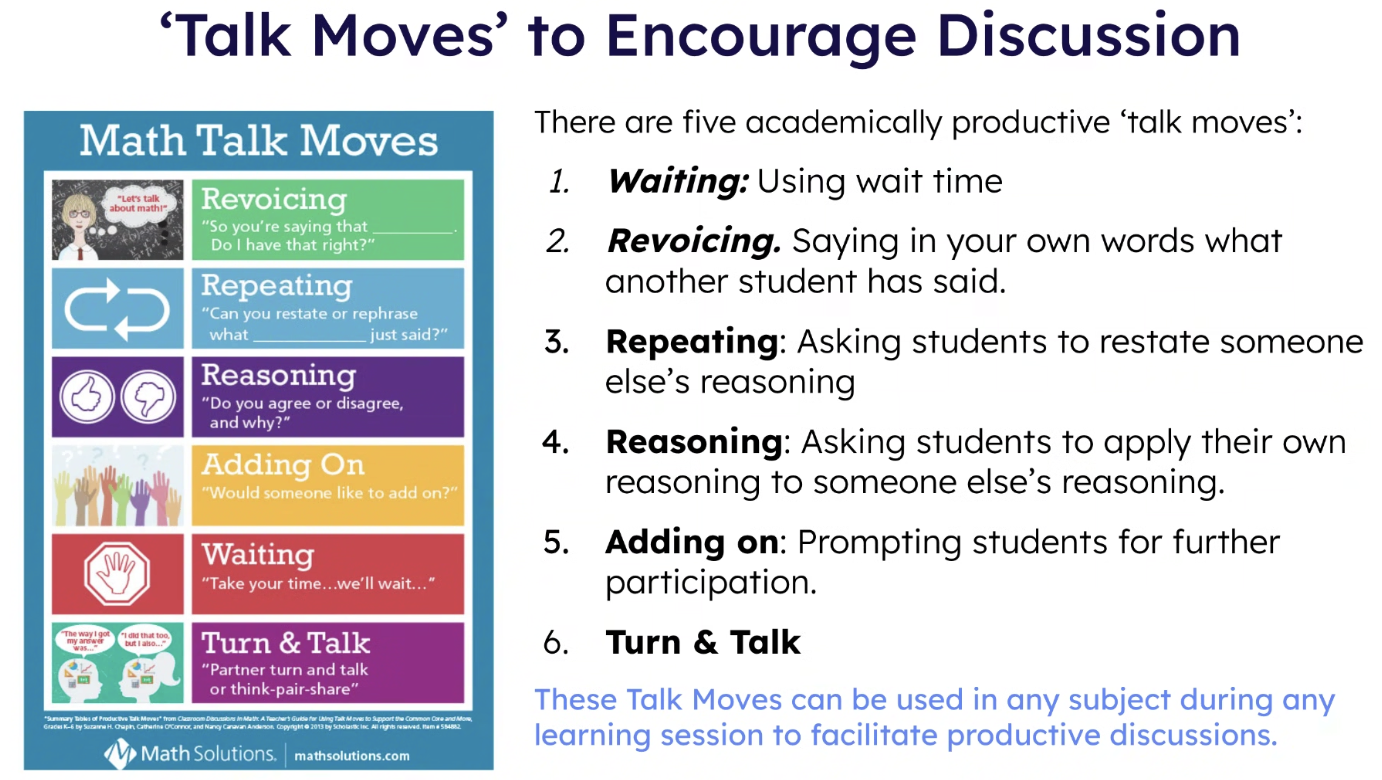
My next steps: begin 'maths talks' framework, to help our learners to incorporate the vocabulary language for maths.

Pod-casting: From research, I believe a key way our learners are able to cement their learning and engage in reflective practices is through metacognition. We'll leverage digital tools, specifically using Mr. Moran's template, to have students podcast their findings and thinking. This approach will empower them to explain concepts, demonstrate skills, and reflect deeply on their learning journey, all while fostering essential 21st-century skills like communication, collaboration, critical thinking, and creativity.

Monday, 30 June 2025

2025 Pasifika@Manaiakalani Conference

 'Sui faiga ae tumau fa'avae' – Practices may change, but foundations remain. 

This Samoan proverb truly encapsulates the essence of our recent Pasifika Conference. It highlights how our educational practices are continually evolving, yet our core cultural foundations lasts.

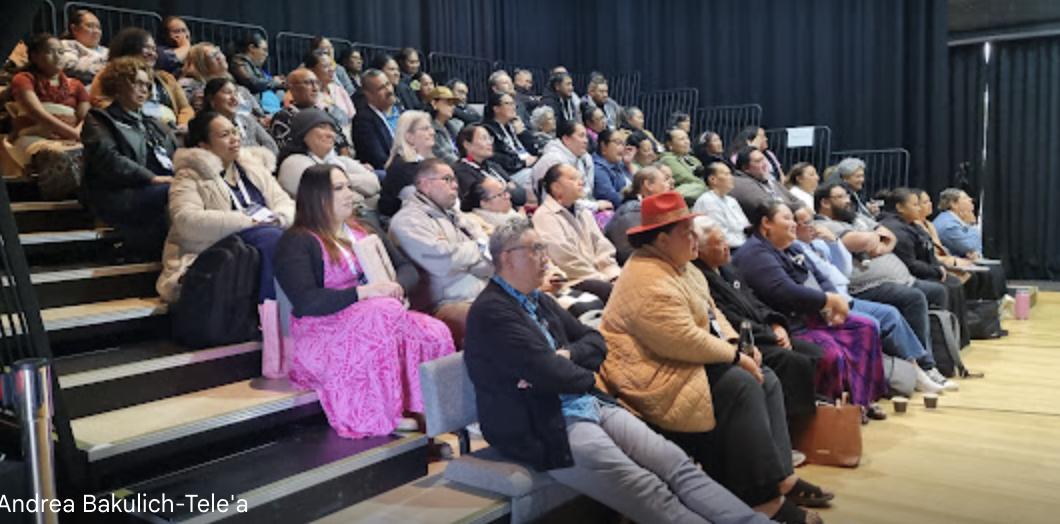
There's something special and magical when Teachers/Practitioners under the umbrella of Pasifika gather. It's has a 'Talanoa Vibe' where the values of 'Ofa (love), Faka’apa’apa (respect), Māfana (warmth), and Mālie (humour – aka hyena laughs!).

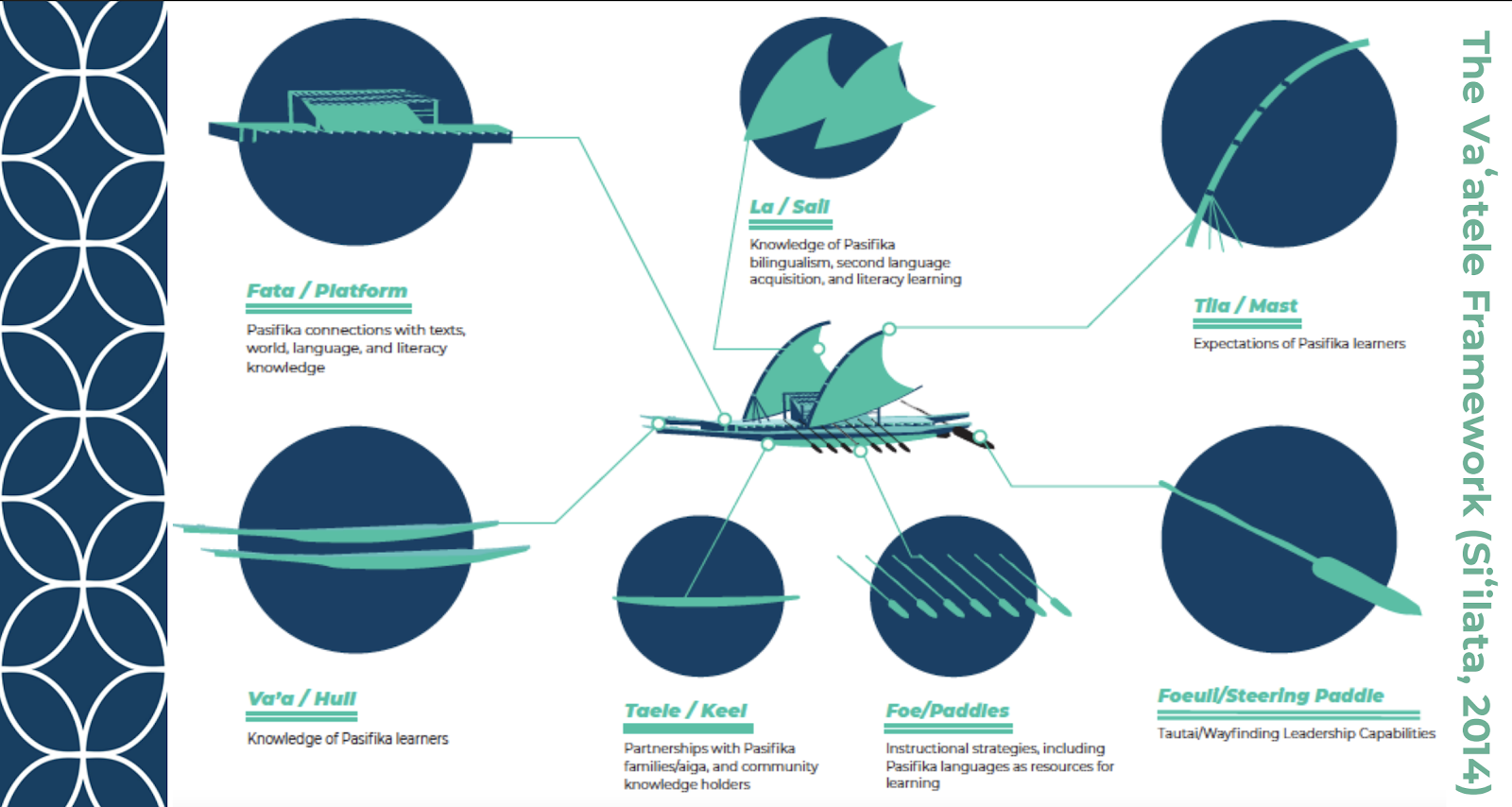
The conference began with Dr Rae Silata leading with the 'Va'atele Team' presenting their insightful scientific research and findings on "Creating spaces for Pacific Heritage languages, cultures, and identities." link 

A few things really stood out for me:

1. Valuing Pasifika Learner Capital: It was great to see an increased awareness of current and past projects that truly endorse and support the inherent strengths and knowledge (or "capital") our Pasifika learners bring to the table.

2. Pacific Wayfinding Educational Leadership: The four-phase Pacific Wayfinding Educational Leadership framework was particularly insightful: a) Reading signs: Understanding the current landscape and context. b) Making adjustments: Adapting strategies as needed.  c) Recalibrating: Fine-tuning approaches for optimal outcomes. d) Drawing on multiple knowledge: Leveraging diverse sources of wisdom and information.

3. Valued Knowledge & Pasifika Success: A critical question posed was: Whose knowledge is valued at school? This directly ties into defining what truly constitutes Pasifika success (Siʻilata, 2014).

4. Challenging "Time on Task": The notion that simply giving emergent bilinguals more English instruction from an early age automatically leads to better academic English and school success is a myth. Decades of research on bilingualism, cognition, and language learning prove this approach is misleading. For true success in building English language skills, we must include and leverage their native language.

  • Workshop 1: "Our Stories, Our Numbers" presented by Amy & Aina. link  This session explored how maths can be seen in everyday events including fundraisers, church gatherings, or funerals, encouraging our learners to apply a mathematical lens to their authentic activities.

  • Afterwards, we enjoyed a delicious lunch at our local "Tatou Cafe," hosted by "Pay Rise," an organisation that encourages students from Tamaki College in the hospitality program. It was great to see an ex-student from Pt England School!

  • Workshop 2: "O se Auala i le Iloa - A Way of Knowing/A Route for Knowledge (or Ideas): A.I." Eseta Setu from AcademyEx spoke about navigating the A.I. wave as wayfinders, embracing new knowledge pathways. link 

  • Workshop 3: Nafanuatele from MPP workshop was 'Revitalising Pacific Languages: A Talanoa for Educators' shared crucial facts about our Pacific languages in crisis of dying and how can we grow & sustain our languages.  NZ now has 12 languages that we celebrate throughout the year.  link

A huge thank you and acknowledgment to Andrea Tele'a and the entire team who spearheaded this event – what a success in bringing this vision to fruition! It was truly inspiring to connect with teachers from across Auckland who share the same passion and vision: raising student achievement through culturally responsive practices & digital affordances.  

Look forward to the next Pasifika Manaiakalani Network!  More photos


Monday, 9 June 2025

The Power of Outdoor Brain Breaks: Enhancing Learners' Wellbeing


"Because students don't need stickers - they need to feel seen." quote by Filipe Menezes, the founder of Hauora Education. This really resonated with me and got me thinking about how we connect, teach, and care for our tamariki and ourselves as educators.

I read an article from the Hauora Education titled "Replacing Behaviour Charts with Connection: A New Approach to Classroom Wellbeing." It challenges the traditional approach of using behaviour charts and instead focuses on fostering emotional resilience, social connection, and holistic wellbeing. The article emphasises that accountability isn't about ignoring misbehaviour but shifting the focus from punishment to reflection. In a connected classroom, consequences are relationally anchored, students learn to reflect, restore, and repair, and teachers model emotional regulation and boundaries.

Being a classroom teacher for the last eight years, I've worked with a diverse range of learners—everything from energetic young men to those who find learning a bit tough, and some with unique behavioural needs. In the last couple of years, while working on my Masters (Digital Fluency via personalised learning), a colleague's research presentation really struck a chord with me. It highlighted the importance of outdoor education for our learners' but especially their Hauora and Mana.

So, I started taking my class outside for 'Brain-breaks'—in a form of 'Movement breaks', short, guided physical activities or stretches to release tension and refresh focus, this can boost brain function. 

Brain-break is called "K-O", playing this games like a modified cat and mouse. These breaks help physical training, building resilience, social connections, and soaking up some good old vitamin D. In the last couple of years, I've usually split the groups to balance high-performing sports players with those who prefer to read in quiet spaces.

This year, I've allowed our Year 4 students (building student voice & agency) to select their own teams. Our brain breaks (max 10mins) at 10amish and 12:15pm had two outstanding Year 4 students lead their teams. Initially, they struggled with 'stop, look, and listen,' or listening to instructions (.. yeap!)

Last week, we bumped into my old class, now Year 6's, who were keen for a challenge with my young Year 4's. I was so sure our Year 6's would outwit my Year 4's... how wrong was I?! Over the years, I still hear students chatting about playing "KO" challenges with my newer class. There's still plenty of banter, but it’s all about building connections, sharing laughs, creating memories, and having fun. Most importantly, it boosts 'hauora and Mana' for our young learners.

I wonder how much more can outdoor brain-breaks make a difference in boosting our students' wellbeing, attendance and confidence?

Reference: 

Klapp, T., Klapp, A., & Gustafsson, J.-E. (2023). Relations between students’ well-being and academic achievement: Evidence from Swedish compulsory school. European Journal of Psychology of Education. https://doi.org/10.1007/s10212-023-00690-9

Olcar, D. (2021). The role of academic flow in students' achievement and well-being. Problems of Education in the 21st Century, 79, 912. https://doi.org/10.33225/PEC/21.79.912


Thursday, 29 May 2025

Manaiakalani Teacher Only Day "Using Google Vids to Share Maths"

"How can we empower our students to become creators and storytellers of their own learning journeys using digital tools?"

As part of my completed Masters, 'Championing Digital Fluency via Personalised Learning,' I have been deeply invested in discovering more ways to encourage our students to 'create or be creators.'

It's all about teaching our learners to utilise 21st Century skills like creating, critiquing, communicating, and collaborating. Mr. Moran showcased some awesome blog posts from past students in my class, which was really inspiring.

In our workshop, we got hands-on with Google Vids. I discovered a few features I wasn't aware of, like the importance of writing a script before hitting record and how to integrate Google Slides into the video. Exporting the Google Vid to a Google folder wasn’t super straightforward, but it’s definitely more accessible for our students using Chromebooks compared to the iMacs.

It was a great workshop, and I'm keen to use this approach to measure my learners' progress and help develop their mathematical vocabulary. We had to use and record ourselves using google vid .. I'm still a amateur .. lol!


 In our workshop, we got hands-on with Google Vids. I discovered a few features I wasn't aware of, like the importance of writing a script before hitting record and how to integrate Google Slides into the video. Exporting the Google Vid to a Google folder wasn’t super straightforward, but it’s definitely more accessible for our students using Chromebooks compared to the iMacs.

It was a great workshop, and I'm keen to use this approach to measure my learners' progress and help develop their mathematical vocabulary. We had to use and record ourselves using google vid .. I'm still a amateur .. lol!


Sunday, 16 March 2025

Toolkit: Maths Talks for Thinking & Discussion - Elena Terek

Today is my first toolkit for this term.  Please find the link to this workshop.

Elena presented the toolkit of "Maths talks as 'enablers' and extenders'. 

This year, my professional inquiry is looking at building vocabulary for our mathematical learners.  

Last week I was in a online workshop led by Dr Craig Hansen.  A couple of things struck a cord: 

1) creating engaging tasks will help our students build procedural fluency.  

2) Vocabulary is pivotal. 

Teaching literacy alongside math, checking that our students understand the key terms they need to succeed as they progress from Year 0 to Year 8.

At the end of each phase, there’s a vocabulary table that aligns with the year level, which helps us connect literacy with math and ensures our students have the foundational vocabulary for understanding. 

Rich task: high ceiling, low floor. 

Learning is a highly social activity.  Maths endorses this.  You can use 'image talk' to launch your maths talks.

Can can use multiple visuals, to support our learners to make connections.

A Survey's was conducted for Year 4-8, results from this survey, it was surprising to see that the students believed there is no connection with 'real-life' and mathematics. (interesting)

 How do we do this?

-create & maintain positive risk-free learning space

-ground rules for talk 

- provide opportunity to use different visuals or models.  Teacher will model mathematical thinking.


-Talk moves' was main focus in DMIC, raising social status

- Wait time is essential, a minute is a suitable time to wait.  Allow the students to 'think'.  Use the 'hand gesture' to say how they're feeling.

- construct 


To make connections for 'real-life' and maths, using these 'image talk' will help.  


Questions to ask:  Maths talks: What do you notice?  What do you wonder?  The next step is what 'maths can you see?'.

This is the feedback from staff during the workshop

Planning is essential even for 'image talk', what the learners might say. Be ready for the responses.

Our learners love sports, but still unable to see how it's connected for maths.

Logical and critically thinking.

Thursday, 13 March 2025

2025 Inquiry Action (Term 1)

With the announcement of Structured Literacy and Structured Mathematics, I was looking forward to the changes.

I've found it challenging to teach maths to our diverse learners. When I began my teaching practice, we were using DMIC mathematics. I spent a whole year establishing 'social' norms and building student status, which didn't seem to help at first. However, now maths talks are an essential part of our maths class.

I've now moved to a new team, which means learning a new system. We've started using PR1ME Maths, beginning with a placement test to determine which book each student should start with.

From our Teacher PD, in phases 1 through 3 (Years 0-8), it's crucial to ensure we're teaching at the appropriate year level. We should create engaging tasks that build procedural fluency and cater to diverse learning needs. The "understand and do" framework emphasises that true understanding comes from mastering math processes. The UKD (Understand, Know, and Do) ethos guides us in developing 'rich tasks' for each phase.

Vocabulary is essential in maths, as maths and literacy are interconnected. The curriculum focuses on building positive relationships with learners. Progress outcome statements, found on page 60, guide Year 4 students during Year 5. 'Prior learning' refers to what students learned last year or in previous stages, and it's important to address any gaps in prior knowledge.

All my learners are on the Placement One test, even though their end-of-year reports indicated they were operating at Year 2 - Year 3 OTJ levels. A few issues have arisen with our learners. They need to read parts of the PR1ME text to complete the questions, and they also require mathematical vocabulary to understand the maths stories.

The OTJs assigned to them last year were based on the older curriculum. With the new curriculum, the rubric has shifted, which has resulted in their OTJs dropping this year.

That lead me to my inquiry question "How can I enhance our explicit instruction and visual support to improve our students' understanding of mathematical vocabulary and their ability to independently solve word problems?"

I chose these three to focus on in my practice: 

Reinforce Vocabulary Through Multi-Sensory Experiences: This approach combines visual aids and hands-on learning, which can be very effective for diverse learners. Using objects and games can make vocabulary more relatable and engaging.

Explicitly Teach Vocabulary Within Problem-Solving: Pre-teaching vocabulary and modeling problem-solving helps students understand how to apply new words in context. This can be particularly helpful in building their confidence with math language.

Scaffolded Instruction and Gradual Release: By modeling and practicing together before allowing independent attempts, you provide a supportive learning environment. This helps students gradually build their skills and confidence.

Watch this space!

Sunday, 2 March 2025

Term 1: Manaiakalani Learn Staff Meeting "R-A-T-Effective practice

R-A-T- Effective Practice link

Today we had our Manaiakalani presenters Fiona & Matt share key elements of effective practice in the digital space for our learners.  As the digital landscape is evolving, they've been able to identify key elements of effective practice:

Recognise Effective Practice: "Knowing what works, and how you know it works."

Effective Practice: Grounded in Principles

  • Builds on existing frameworks (NZC, MoE) and teacher experience.
  • Confidence comes from aligning practice with frameworks and research (Manaiakalani).
  • Research reinforces observations with data and student voice.

Recognising Effective Practice in the Classroom:

  • Engaged Learners & Student Agency: Active participation, enthusiasm, on-task behaviour and Choice, ownership, goal setting, creation
  • Meaningful Learning: Articulated understanding, critical thinking, deep learning.
  • Purposeful Technology: Enhances learning, student competence, personalised learning.
  • Facilitative Teaching: Guidance, feedback, inclusive environment.
Core Idea: Effective practice is identified by observing student and teacher behaviours that align with established educational principles.


Amplify Effective Practice: Scaling and sharing effective teaching practices using technology. Connected Learners Share the value of giving and getting empowers us all 

Amplifying Effective Practice Using Technology Strategically:

  • Purposeful Use: Technology enhances proven teaching, not just for its own sake.
  • Resource Access: Teachers leverage online resources and collaboration to refine strategies.
  • Critical Evaluation: Teachers use critical thinking to ensure digital tools are effective.
  • Quality Focus: Amplify effective practices, not just any practice.

Amplification in the Classroom:

  • Enhanced Learning: Interactive tools, video lessons, personalised feedback.
  • Increase collaboration: Sharing and learning together online: working on projects, using google suite as well as commenting on each others Edublog, giving peer-review feedback.
  • Student Creation: Digital portfolios, presentations, student-generated resources.

Key Idea: Technology amplifies good teaching through intentional, critical, and collaborative use.


Turbocharge Effective Practice: Transforming learning experiences through technology to enable  learning previously not possible Turbocharging Learning (SAMR):

  • Beyond Basics: It's not just replacing old tools with digital ones. It's changing how kids learn.
  • Redesign Tasks: Make learning more engaging and meaningful.
  • Transform Learning: Use tech to do things you couldn't do before.


Modify:
  • Digital storybooks with multimedia.
  • Interactive research presentations.
Redefine:

  • Global classroom collaborations & Podcast.
  • Student-made educational games.

In short: Turbocharging means using technology to create powerful, new learning experiences.  Transforming learning experiences through technology to enable learning previously not possible.


Some recommendations - how to use prompts when dealing with AI.

When using generative AI, it's generally suited for learners over the age of 13. However, it's essential to check individual site terms for appropriateness. Today, our staff used Adobe Firefly to create images from text prompts. For example, we created PES Remix 'The Alley' which visually represented [brief description of image]. 

My next step is to explore what do our learners know (which is still at starting point), how do they feel about using their chrome-books? What help do they need? What are their 2025 digital goals? What do they want to learn to  .. "create"? 

Monday, 3 February 2025

Teacher Pr1me PD

The PR1ME Maths programme is all about getting our learners engaged and mastering those maths concepts with a structured approach. Each concept builds on the last, so we're creating a solid foundation as we go. It's all tied into the NZ Maths Curriculum and packed with problem-solving. Before we dive into a new chapter, we check in on what the kids already know to make sure they're ready to tackle the new stuff. We use a concrete-pictorial-abstract approach, which means getting hands-on with manipulatives to really get the idea across. Students work through the chapter book first, then hit the practice workbook, with heaps of lessons to back it all up. Lately, we've been diving into comparing and ordering numbers.

PR1ME's all about the "readiness-engagement & mastery model," which keeps the kids motivated. They get stuck into the practice book and digital exercises to nail proficiency and flexibility. If a student hits 80%, it means they've got the hang of it! We keep a word problem on the whiteboard for ongoing problem-solving practice, and the 'spiral' curriculum lets us revisit concepts without writing in the course book.

In our class, we practice, assign, and make sure everyone knows the difference between the course book and the practice book. We track progress with student voice by using highlighters on the practice book's content page—yellow for gold shows where they've shined! 

Our group sessions are quick and focused, about 15 minutes, to keep things snappy and effective.

Looking forward to using this curriculum, I wonder how our learners will find it?